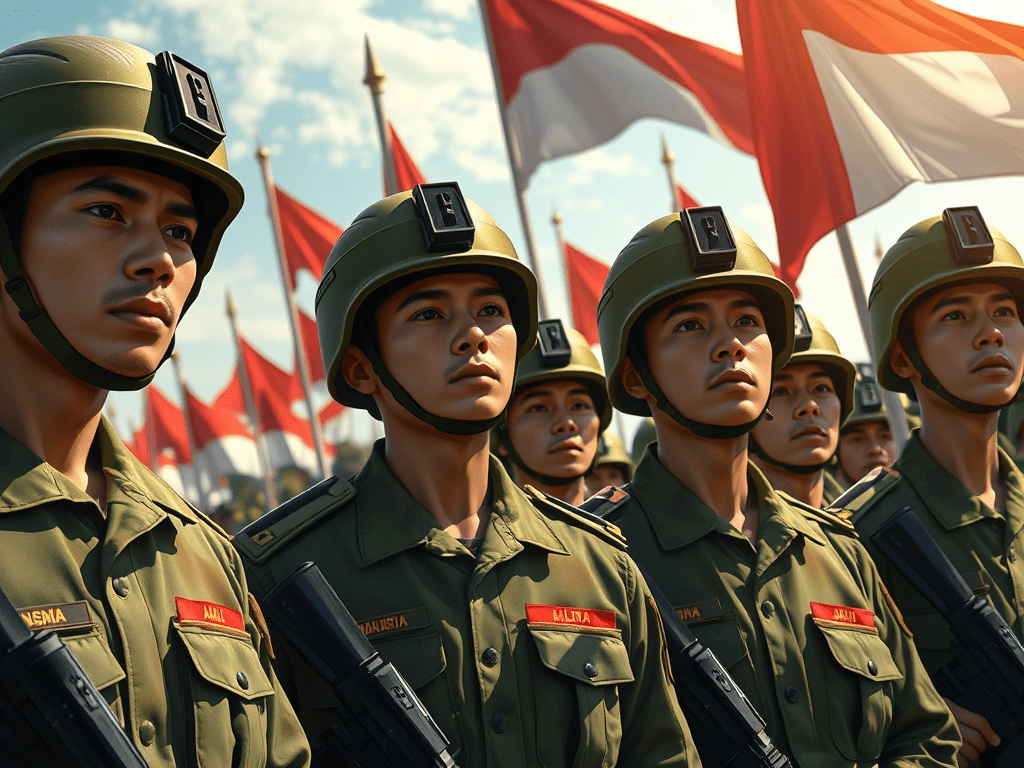
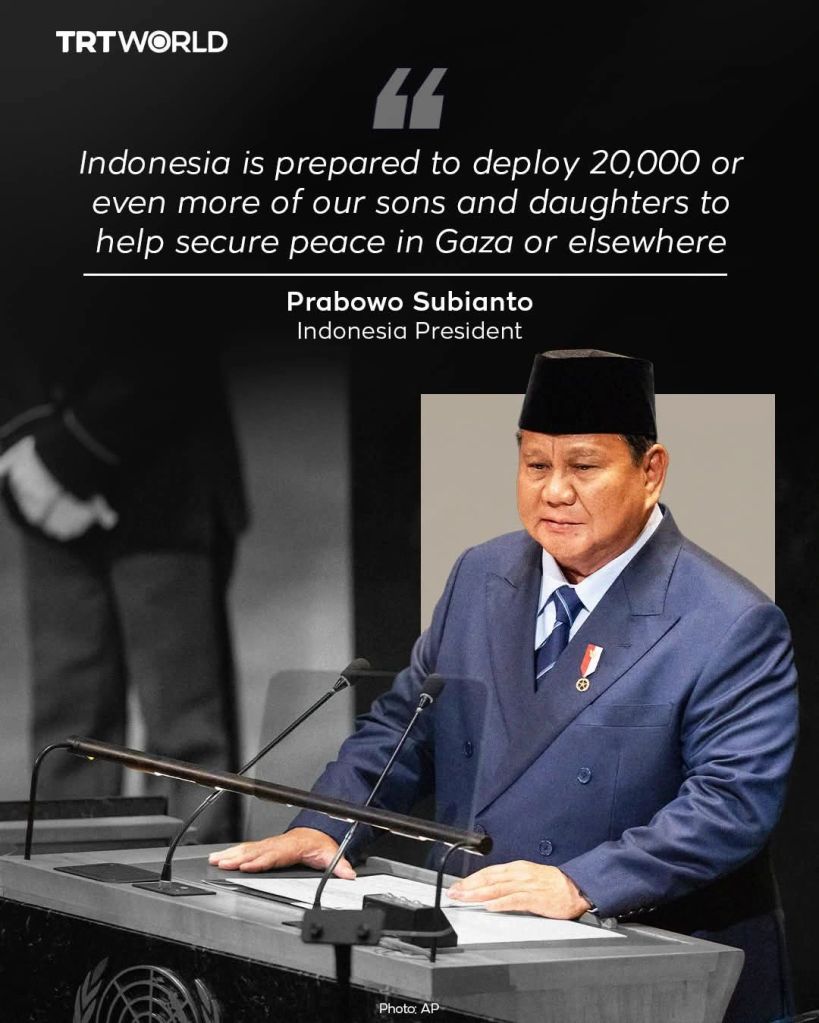
Indonesia has officially offered to deploy up to 20,000 troops to help secure peace in Gaza. This deployment would be part of a potential UN peacekeeping mission.
On September 23, 2025, President Prabowo Subianto announced at the United Nations General Assembly Indonesia’s readiness to send personnel for global peacekeeping.
The President stated that Indonesia is prepared to deploy troops to Gaza, Ukraine, Sudan, and Libya upon UN request, with the country covering the costs.
Subianto explained the offer as part of Indonesia’s longstanding commitment in solidarity with the Palestinian people.
He stated: “We will continue to serve where peace needs guardians—not just with words but with boots on the ground.”
Indonesia is positioned as a key player in stabilizing Gaza after the war.
Indonesia has a long and proud history of contributing to international peacekeeping efforts, particularly through United Nations missions. Here’s a detailed look at its involvement:
Early Contributions
- First Mission (1957): Indonesia’s peacekeeping journey began with the deployment of the Indonesian Garuda Contingent I to Egypt during the Suez Crisis. This marked the start of its active role in global peace efforts.
Global Deployments
Indonesia has participated in numerous UN and non-UN peacekeeping missions across the globe, including:
- Congo (1960): The Garuda II Battalion was sent to support the UN Force during the Congo Crisis.
- Democratic Republic of the Congo: Indonesian engineering units contributed to infrastructure projects like bridge rehabilitation under MONUSCO.
- Central African Republic: Indonesia was among the first to deploy peacekeepers under MINUSCA following inter-communal violence.
- Lebanon: Indonesia’s largest contingent currently serves with UNIFIL, maintaining peace along the Lebanon-Israel border.
Personnel and Impact
- Total Contributions (1957–2012): Over 25,874 Indonesian personnel—including military, observers, and civilian police—have served in peacekeeping missions.
- Casualties: 31 Indonesian peacekeepers have lost their lives in the line of duty.
- Notable Figure: Former President Susilo Bambang Yudhoyono is the only national leader to have served as a UN peacekeeper, highlighting Indonesia’s deep commitment.
Indonesia’s peacekeeping legacy reflects its dedication to global stability and humanitarian service. If you’re curious about current missions or future plans, I’d be happy to explore that next.
Global Reactions to Indonesia’s Peacekeeping Offer
Indonesia’s bold proposal to contribute up to 20,000 troops to future UN peacekeeping missions—announced by President Prabowo Subianto at the UN General Assembly—has sparked significant international attention and cautious optimism.
Indonesia’s Proposal
- President Prabowo emphasized Indonesia’s commitment to multilateralism and global peace, offering troops and financial support for missions in Gaza, Ukraine, Sudan, Libya, and other conflict zones.
- He positioned Indonesia as a reliable peacekeeping partner, noting its history as one of the top 10 contributors to UN peacekeeping forces.
International Response
- United Nations: While the UN has not formally responded, Prabowo’s speech was well-received for its emphasis on collective security and humanitarian support.
- Arab States: Some Arab nations are reportedly open to contributing troops to a post-war peacekeeping force in Gaza, but have not publicly committed. Their participation may hinge on the inclusion of the Palestinian Authority, which Israel currently opposes.
- Israel and Palestine: Indonesia’s offer is seen as part of its broader support for Palestinian statehood. Prabowo reiterated that Indonesia would recognize Israel if Palestine gains.

Leave a comment